
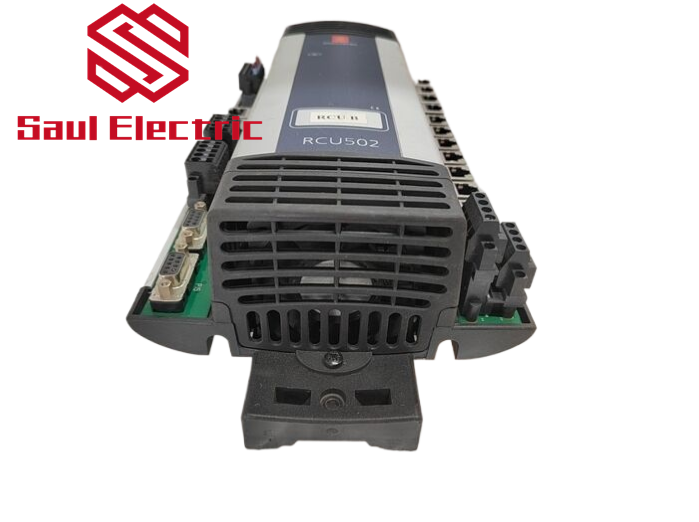
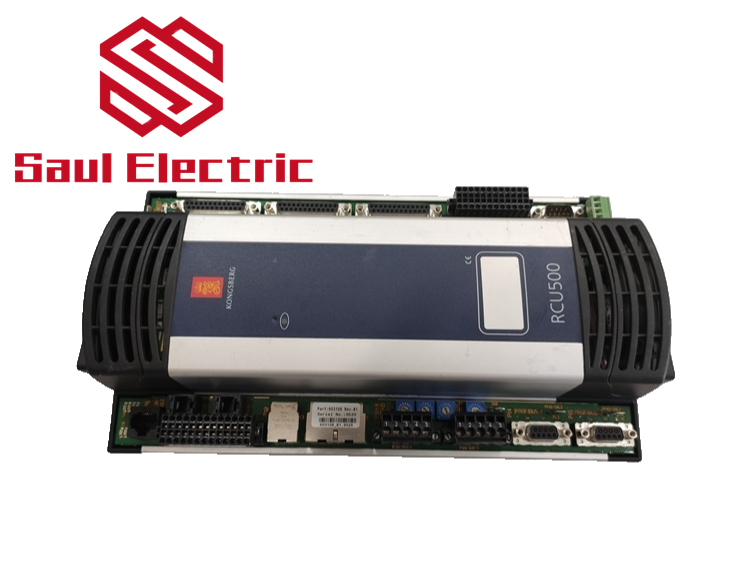

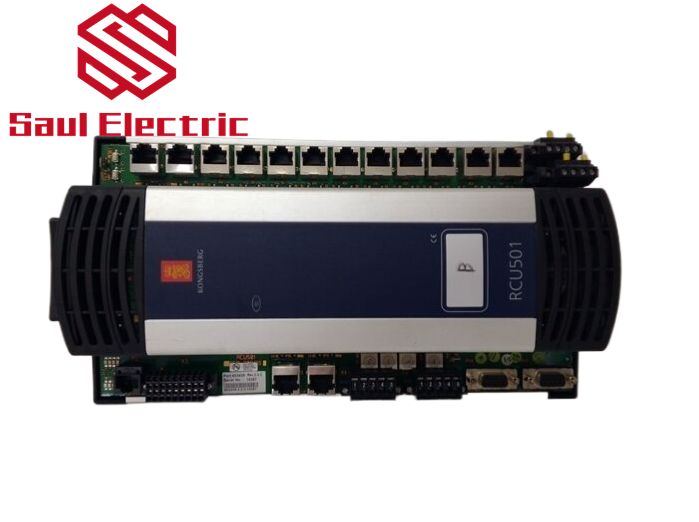
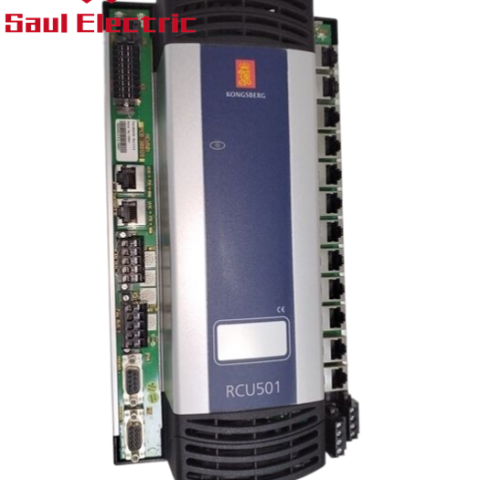
KONGSBERG RCU501 is a high-performance general-purpose real-time process control computer, serving as a critical remote controller unit designed for a wide range of onshore and offshore industrial applications. Equipped with an embedded Power PC™ processor core, KONGSBERG RCU501 integrates multi-protocol communication interfaces, redundant system architecture, and comprehensive diagnostic functions, enabling reliable real-time data processing and control signal transmission in complex industrial environments.
As a versatile control solution approved for Ex Zone 2 hazardous areas, KONGSBERG RCU501 complies with strict industry standards such as IEC 61508 and IACS E10, ensuring compatibility and safety in critical systems. Its flexible topology supports single, dual, or triple unit configurations, adapting to different safety integrity level (SIL) requirements from SIL 1 to SIL 3. Whether deployed in dynamic positioning systems, process control networks, or safety monitoring systems, KONGSBERG RCU501 delivers stable and precise control performance, acting as the core of reliable industrial automation operations.
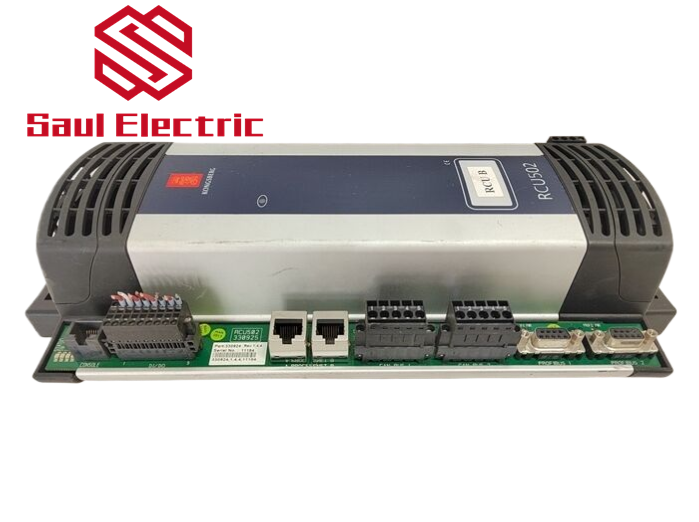
Technical Specifications
Parameter Name | Parameter Value |
Product Model | RCU501
Manufacturer | KONGSBERG
Product Type | Remote Controller Unit
Processor Core | Embedded Power PC™ Architecture
Communication Interfaces | Dual Ethernet LAN, Dual Remote I/O Process Bus (R Bus), 32 Serial Lines, 2 Profibus Channels, 2 CAN Bus Channels
Digital I/O Channels | 4 General-Purpose Digital Inputs, 4 General-Purpose Digital Outputs
Supported Protocols | Modbus (Serial & TCP), NMEA 0183, Profibus/ProfiSafe, CAN/DeviceNet
Maximum I/O Capacity | 2000 I/O (Process/Automation, 1 Hz Scan Rate); 800 I/O (ESD/PSD, 1 Hz Scan Rate)
Maximum Update Frequency | 50 Hz (Anti-surge Loops); 1-10 Hz (Dynamic Positioning)
Safety Compliance | SIL 1 (Single Unit), SIL 2/3 (Dual Unit); Ex Zone 2 Approved
Power Supply | Redundant Power Input with Inrush Current & Over-voltage Protection
Operating Temperature Range | -20°C to 60°C
Mounting Type | DIN Rail Mount
Approval Standards | IACS E10, IEC 60533, IEC 60945, IEC 61508, IEC 62061
Type Approval | Det Norske Veritas (DNV), American Bureau of Shipping (ABS)
KM Article Number | 603439
Main Features and Advantages
Flexible redundancy and safety design: KONGSBERG RCU501 supports multiple topology configurations, with dual and triple unit setups enabling 1oo2 hot-standby redundancy and SIL 2/3 compliance. This redundant architecture, combined with built-in power alarm monitoring and enhanced watchdog functions, ensures fail-safe operation and minimizes system downtime, critical for mission-critical applications such as offshore dynamic positioning.
Comprehensive communication compatibility: KONGSBERG RCU501 integrates a rich set of communication interfaces, including dual Ethernet LAN, Profibus, CAN Bus, and 32 serial lines, supporting multiple mainstream industrial protocols. This allows seamless integration with third-party sensors, actuators, and control systems, reducing integration complexity and expanding application scope.
Easy installation and maintenance: KONGSBERG RCU501 features DIN rail mounting and pluggable connections, simplifying on-site installation and replacement. The built-in extended self-test (BIST) function enables automatic fault diagnosis during start-up and runtime, while support for online remote diagnostics and firmware upgrades eliminates the need for on-site maintenance of critical components. Status LED indicators provide intuitive system status monitoring, facilitating quick fault identification.
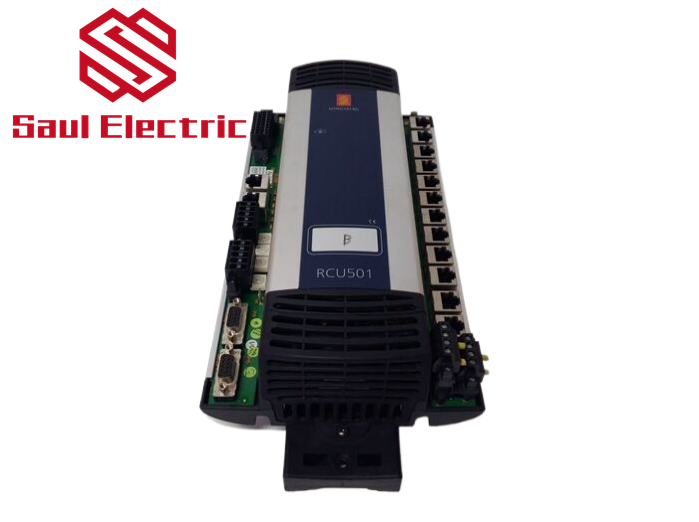
Application Fields
In offshore maritime applications, KONGSBERG RCU501 is a core component of dynamic positioning (DP) systems and thruster control/steering systems for ships and offshore platforms. It processes real-time data from navigation sensors, calculates precise positioning commands, and controls thrusters to maintain the platform’s position, ensuring safe operations in offshore oil and gas exploration, wind farm construction, and marine salvage.
Onshore industrial facilities, such as oil refineries and chemical plants, utilize KONGSBERG RCU501 in integrated process control systems and safety monitoring systems (ESD/PSD). Approved for Ex Zone 2 hazardous areas, it monitors critical process parameters such as pressure, temperature, and flow rate, triggering timely safety interlocks to prevent accidents. Its high I/O capacity and stable performance ensure reliable operation of large-scale process networks.
In renewable energy and marine engineering,KONGSBERG RCU501 serves as a navigation sensor integrator and alarm monitoring system in offshore wind farms and tidal energy facilities. It integrates data from various environmental sensors and control devices, enabling centralized monitoring and remote control of equipment, optimizing energy production efficiency and ensuring operational safety in harsh marine environments.
Related Products
1:60WKS series 60WKS-M240/22 analog servo amplifier
2:KONGSBERG Controller RCU500 Remote Controller Unit
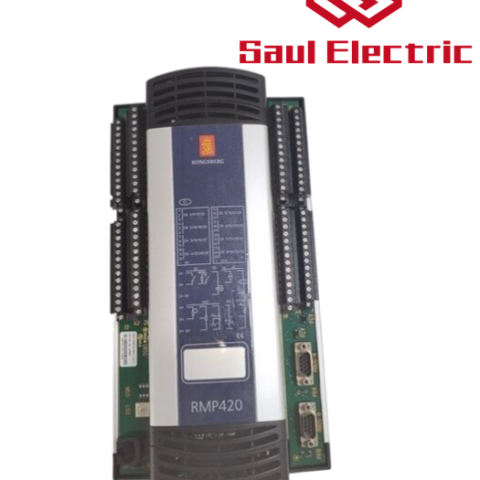
3:RMP420-Remote Multipurpose Input/Output module
5:Motorola MVME162-013/MVME162-013A VMEbus computer board
Installation and Maintenance
Installation preparation: Before installing KONGSBERG RCU501, confirm the installation environment meets Ex Zone 2 requirements and verify compliance with relevant standards (IEC 60945, IACS E10). Ensure the DIN rail is securely mounted, clean, and properly grounded. Check that the redundant power supply voltage matches the module’s specifications and use shielded cables for communication connections to minimize electromagnetic interference. Set the 3-digit address switches according to the system configuration to avoid address conflicts.
Maintenance recommendations: Conduct monthly visual inspections of KONGSBERG RCU501 to check the status of LED indicators, pluggable connections, and cable integrity. Use the built-in BIST function quarterly to perform comprehensive system diagnostics. Regularly back up system configurations and update firmware via online remote tools to enhance performance and security. In redundant configurations, test the hot-swap function semi-annually to ensure seamless failover, and replace any faulty modules promptly to maintain system redundancy.
There are no reviews yet.